
How I Learned to Name It

It was never taught—
just modeled:
a hand pulled back too fast,
a glance that stayed too long.
Emotion was a private thing,
like shame
or hunger.
I learned to watch
before I spoke,
to feel
without showing it.
To smile with teeth,
to cry like a thief.

Later,
books said: Name it to tame it.
Therapists said: Go deeper.
I nodded, like I understood.
But the body—
the body never lied.
Sometimes I say grief
when I mean regret.
Sometimes I say anger
because betrayal feels too soft.
Emotional literacy
is not elegance.
It is the bruise you press
because you want to know
if it still hurts.
Nobody taught me how to name it.
I just watched.
Watched people go quiet when things got hard.
Watched people laugh when they wanted to cry.
Watched adults lie to themselves,
call it strength, call it keeping the peace.
I learned not to speak about what I felt.
I learned to stay useful.
I learned to read the room
before I ever read a book.
When I finally got asked how do you feel?
I froze.
Not because I had no feelings,
but because there were too many.
Stacked. Compressed. Years thick.
And I had no map.
So I gave answers like:
Tired.
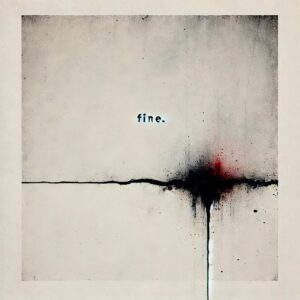
Fine.
I don’t know.
But I did know.
I just didn’t trust that it was safe to say it.
Sad meant weak.
Angry meant dangerous.
Confused meant stupid.
And joy—joy felt like a setup for a fall.
I had to unlearn all of that.
I had to sit in rooms and admit
that I didn’t know the difference
between hurt and rage.
Between numb and calm.
Between alone and abandoned.
And even that—
even just saying I don’t know—
was the beginning.
What no one told me:
Emotional literacy
is not about naming feelings like flashcards.
It’s about staying in the room
when the feeling feels bigger than you.
It’s about breathing through the story
you told yourself at age six
and never updated.
It’s about asking,
What is this feeling trying to protect?
What did I never get to say?
What part of me is still waiting to be seen?
Some days I still get it wrong.
I call fear logic.
I call sadness tiredness.
I call need a flaw.
No one told me the body
would be the first to speak.
Before I knew the word for no,
my stomach had already clenched it.
Before I could define shame,
my spine had curled around it
like a dying animal.
This was not education.
This was survival.
And later—years later—
when someone said
you seem disconnected from your feelings,
I laughed,
because I had lived inside them
like a house with no windows.
Everything came in.
Nothing got out.
Emotional literacy
was not a vocabulary test.
It was learning how to survive a room
where everyone smiles
but no one speaks of the weight in their chest.
I was fluent in delay.
I spoke I am fine in twenty dialects.
My tears translated as weakness.
My anger got coded as too much.
It took decades
to unlearn that silence
was not peace,
and numbness
was not resilience.
No one told me
that naming a feeling
is not the same as escaping it.
That sad is not enough
when what I meant was
I feel discarded,
out of rhythm with my own worth.
That anxious does not explain
the way I rehearse every conversation
like a closing argument
for a crime I didn’t commit.
I had to teach myself
how to sit
with what scorched me.
To ask, not how do I stop this?
but what is this asking of me?
To see envy not as failure,
but as hunger unmet.
To see rage not as threat,
but as grief’s feral cousin.
I read theory,
but theory didn’t hold me
when my chest locked up.
Books gave me language,
but not presence.
Not touch.
Not safety.
Safety came
only after I chose to believe
that feeling
was not a weakness
I needed to justify.
Now, when the old ghosts return,
I do not turn them out.
I let them sit.
I offer them tea.
I say—
Tell me what you need me to know.
And I listen,
without flinching.
But now I notice when I do it.
Now I pause.
Now I stay.
That is the education.
Not a lesson.
A practice.
Every day.